Sunday, 31 January 2010

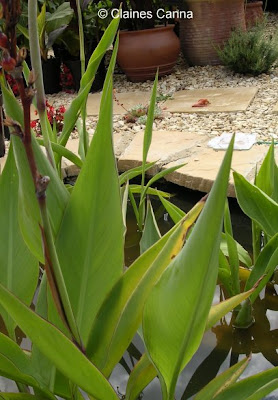
Canna 'Erebus'


A medium sized aquatic cultivar, equally at home as a water marginal or in the border; glaucous green foliage, lanceolate shaped, upright habit; panicles of flowers are open, self-coloured salmon, staminodes are narrow, edges irregular, fully self-cleaning; fertile both ways, not self-pollinating or true to type, capsules globose; rhizomes are long and thin, coloured white and pink; tillering is slow.


Introduced by R.J. Armstrong, of Longwood Gardens, USA in 1977. Earned 'Award of Garden Merit' (AGM) in the outdoor trials held at RHS Wisley, England in 2002.

Saturday, 30 January 2010

Canna 'Epi d'Or'


A medium sized Crozy Group cultivar; green foliage, oval shaped, spreading habit; oval stems, coloured green; flowers are open, yellow with light orange spots, staminodes are medium size, edges irregular, petals yellow, fully self-cleaning; fertile both ways, not self-pollinating or true to type, capsules round; rhizomes are thick, up to 3 cm in diameter, coloured white; tillering is prolific.
Introduced by A. Crozy, Lyon, France in 1885. C. 'Epi d'Or' translates as "Spikes of Gold".

Friday, 29 January 2010

Canna 'Enfant de Rhône'


A small Crozy Group cultivar; green foliage, oval shaped, branching habit; round stems, coloured green; panicles of flowers are open, pink rayed with cerise-pink, throat pale yellow, staminodes are medium size, edges regular, stamen is pink heavily spotted with pale yellow, petals pink, fully self-cleaning; fertile both ways, not self-pollinating or true to type, capsules globose; rhizomes are thick, up to 3 cm in diameter, coloured white; tillering is prolific.
Introduced by A. Crozy, Lyon, France in 1888. Participated in the 1893 Columbian Exposition and described by Prof. L.H. Bailey, Garden & Forest 1893. The earliest reference is the Wilhelm Pfitzer Catalogue, 1890.

Thursday, 28 January 2010

Canna 'Endeavour'


A medium sized aquatic cultivar, equally at home as a water marginal or in the border; glaucous green foliage, lanceolate shaped, maroon margin, upright habit; oval stems, coloured green; panicles of flowers are open, self-coloured red (RHS 45B), staminodes are narrow, edges regular, fully self-cleaning, blooms open in the early morning; fertile both ways, not true to type, self-pollinating, capsules globose; rhizomes are long and thin, coloured white and pink; tillering is average. 
Introduced by R.J. Armstrong, of Longwood Gardens, USA.

This was from a cross with a red-flowered unnamed terrestial canna, the pollen was from C. glauca from Brazil. It honours the British explorer Captain Cook's ship "Endeavour". 

Wednesday, 27 January 2010

Canna 'En Evant'


A medium sized Premier Group cultivar; light green foliage, white margin, spreading habit; round stems, coloured green; panicles of flowers are open, yellow (RHS 12A) with red (RHS 32A) spots, staminodes are large, edges lightly frilled, style is yellow, petals yellow, fully self-cleaning; fertile both ways, not true to type or self-pollinating, capsules round; rhizomes are thick, up to 3 cm in diameter, coloured white; tillering is average.
Introduced by Messrs Vilmorin-Andrieux in 1921. Synonym: C. 'La Garoupe'

Tuesday, 26 January 2010

Canna 'Ellen Layden'


A small Miniature Group cultivar; green foliage, oval shaped, branching habit; triangular stems, coloured green; panicles of flowers are open, self-coloured deep-pink, staminodes are large, edges lightly frilled, labellum is gold with a deep-pink margin, stamen is gold with a narrow deep-pink margin, style is gold, petals yellow, fully self-cleaning; fertile both ways, not self-pollinating or true to type, capsules globose; rhizomes are thick, up to 3 cm in diameter, coloured white; tillering is average.

Introduced by Malcolm Dalebö, Claines Canna Collection, Worcester, England, EU in 2006.
Seedling of C. ‘Topaz’ x C. ‘Theresa Blakey’.

Monday, 25 January 2010

Canna 'Ella Dalebö'


A medium sized Premier Group cultivar; green foliage, oval shaped, branching habit; triangular stems, coloured green; panicles of flowers are open, apricot and fuchsia, staminodes are large, edges lightly frilled, petals yellow, fully self-cleaning, blooms open in the early morning; fertile both ways, not self-pollinating or true to type, capsules globose; rhizomes are thick, up to 3 cm in diameter, coloured white; tillering is prolific.

Introduced by Malcolm Dalebö, Claines Canna Collection, Worcester, England, EU in 2006.

Sunday, 24 January 2010

Canna 'Elfin'


A medium sized Foliage Group cultivar; green foliage, oval shaped, spreading habit; round stems, coloured green; spikes of flowers are erect, salmon-red and peach, throat pale yellow, staminodes are narrow, edges regular, petals yellow, fully self-cleaning; fertile both ways, not self-pollinating or true to type, capsules globose; rhizomes are thick, up to 3 cm in diameter, coloured white; tillering is prolific.
Introduced by Malcolm Dalebö, Claines Canna Collection, Worcester, England, EU in 2003. The plant is a sport of Canna 'Pixie'.


Saturday, 23 January 2010

Canna 'Elaroo'


Another one of Bernard Yorke's indigenous named varieties, Canna 'Elaroo' has behind it all of the vigor of the old Foliage Group, along with the flower size and refinement of the Italian Group.

A tall Australian Group cultivar; green foliage, large, ovoid shaped, maroon margin, branching habit; oval stems, coloured green; spikes of flowers are open, ivory with cerise stripes, throat cerise, staminodes are large, edges regular, good bloomer, blooms open in the early morning; fertility unknown; rhizomes are thick, up to 3 cm in diameter, coloured white and pink; tillering is average. 

Introduced by Bernard Yorke, Queensland, Australia in 2008, the breeding is C. 'Red Stripe' x 'Bengal Tiger'


Cannas by Bernard Yorke

Friday, 22 January 2010

Canna 'Eileen Gallo'


A small Crozy Group cultivar; green and purple variegated foliage, branching habit; oval stems, coloured green + purple; flowers are open, pale pink and apricot, staminodes are medium size, edges regular, petals yellow, fully self-cleaning; fertile both ways, not self-pollinating or true to type, capsules globose; rhizomes are thick, up to 3 cm in diameter, coloured white and purple; tillering is average.

Introduced by Ben R. Hager of Stockton, California, USA.. Mr Hager is renowned primarily as a highly successful breeder of Iris and Hemerocallis. The cultivar was named for a member of the wine-making Gallo family of California.

Synonyms: C. 'Eileen Gail', C. 'Eileen Gale', C. 'Elaine Gallow', C. 'Ellen Gallow'

Thursday, 21 January 2010

Canna 'Ehemannii'


A tall Foliage Group cultivar; green foliage, oval-acuminate shaped, spreading habit; round stems, coloured green; flowers are pendant panicles, self-coloured carmine, staminodes are large, edges regular, labellum is carmine, petals red; seed is sterile, pollen is fertile; rhizomes are thick, up to 3 cm in diameter, coloured white and pink; tillering is prolific.

Introduced by Théodore Année, Passy, France, EU. A hybrid cross of C. iridiflora and C. indica warscewiczii. It was distributed by M. Kolb, Inspector of the Botanical Garden at Munich, who first distributed it as C. iridiflora hybrida, but later as C. 'Ehemanni', named after Herr Ehemann of Stuttgart. They were able to do things like that in those days as there were no International rules of naming behaviour.

Awards:
  • 1880, R.H.S. First Class Certificate (equivalent to the AGM).
  • 2002, 'Award of Garden Merit' at the RHS Wisley trials.

The two highest awards possible and earned 122 years apart. It says it all for the quality of this hybrid.

Wednesday, 20 January 2010

Canna 'Egandale'


A medium sized Crozy Group cultivar; bronze foliage, oval shaped, maroon margin, branching habit; panicles of flowers are open, self-coloured cherry-red, staminodes are medium size, edges regular, fully self-cleaning, good bloomer; fertile both ways, not self-pollinating or true to type, capsules globose; rhizomes are thick, up to 3 cm in diameter, coloured purple; tillering is average.

Writing in Garden and Forest of May 23, 1894, Professor Liberty Hyde Bailey described it as having foliage dark maroon and green, very similar in coloring to the old Robusta Perfecta, although more erect in habit; very compact, throwing up numerous heads of bloom which rank with the best in quality, both in size of the heads and quality of the flower; color, bright cherry. Will be particularly sought after, as it is undoubtedly the best dark-leaved sort at the present time for outdoor bedding. Bronze Medal awarded for this at World's Fair, Chicago, 1893.

Tuesday, 19 January 2010

Canna 'Député Hénon'


A medium sized Foliage Group cultivar; glaucous green foliage, oval shaped, white margin, branching habit; spikes of flowers are reflexed, self-coloured canary-yellow, staminodes are narrow, edges regular, labellum is canary-yellow with orange-yellow spots, stamen is canary-yellow, style is canary-yellow, petals green, fully self-cleaning, good bloomer; fertility unknown.

Introduced by Jean Sisly, amateur, gentleman gardener of Monplaisir, near Lyon, France, EU. in 1866.

Monday, 18 January 2010

Canna 'Durban'


A medium sized Italian Group cultivar; green, cream and pink variegated foliage, oval shaped, branching habit; triangular stems, coloured green; panicles of flowers are open, self-coloured scarlet, staminodes are large, edges lightly frilled, fully self-cleaning; seed is sterile, pollen is low fertile; rhizomes are thick, up to 3 cm in diameter, coloured white and pink; tillering is slow.


Introduced by Herb Kelly, USA. Synonym: C. 'Red Durban'

Sunday, 17 January 2010

Canna 'Duchess de Montenard'


A medium sized Crozy Group cultivar; green foliage, oval shaped, spreading habit; round stems, coloured green; spikes of flowers are open, yellow with red spots, staminodes are medium size, edges irregular; fertile both ways, not self-pollinating or true to type, capsules round; rhizomes are thick, up to 3 cm in diameter, coloured white and pink; tillering is average.
Introduced by A. Crozy, Lyon, France. The earliest reference is by Prof. L.H. Bailey, in Garden  and Forest of 1893.

Saturday, 16 January 2010

Flowers can improve Health

Far from posing a risk, flowers could help hospital patients to recover, according to latest research.

The study and survey of Royal Brompton and Chelsea & Westminster Hospitals found little evidence to support claims that flowers harbour dangerous bacteria, leading to them being banned from many wards.
In a study by Giskin Day and Naiome Carter of Imperial College, published on the medical website bmj.com, it was claimed that flowers could even help to improve a patient's health and recovery.
It had been thought that the water in vases used for flowers contained bacteria, but the research found no evidence that this had ever caused a hospital acquired infection.
Flowers were recently banned by Southend University Hospital on the grounds that they posed a health and safety risk around electrical and medical equipment.
But the report argues that flowers are no more dangerous than containers for food and drink in the hospital.
A staff survey found nurses more concerned about looking after the flowers than the risk to patients health.
Other studies have uncovered numerous health benefits in keeping flowers.
One found that patients in hospitals with plants had reduced systolic blood pressure and heart rate, lower ratings of pain, anxiety and fatigue and more positive feelings.


Friday, 15 January 2010

Canna 'Droitwich'


A small Crozy Group cultivar; dark green foliage, oblong shaped, branching habit; spikes of flowers are open, cardinal-red with a gold margin, throat gold with orange-red spots, staminodes are large, edges lightly frilled, petals yellow, fully self-cleaning, outstanding bloomer; fertile both ways, not self-pollinating or true to type, capsules globose; rhizomes are thick, up to 3 cm in diameter, coloured pink and purple; tillering is average. 
Introduced by Malcolm Dalebö, Claines Canna Collection, Worcester, England, EU in 2007. Breeding Canna 'Mandy Robinson' x C. 'Tangerine'

Thursday, 14 January 2010

Canna 'Dreamland'


A small Premier Group cultivar; dark green foliage, ovoid shaped, spreading habit; spikes of flowers are cupped, apricot and peach, staminodes are large, edges irregular, labellum is apricot and peach, petals red, fully self-cleaning, outstanding bloomer; fertile both ways, not self-pollinating or true to type, capsules globose; rhizomes are thick, up to 3 cm in diameter, coloured pink; tillering is average. All of the stamanodes and labellum are edged with a fine ivory margin, adding the final touch to this delicate dream.

Introduced by Malcolm Dalebö, Claines Canna Collection, Worcester, England, EU in 2007. Breeding is Canna 'Theresa Blakey' x open

Wednesday, 13 January 2010

Canna 'Dorothy Taylor'


A medium sized Crozy Group cultivar; green foliage, oval shaped; spikes of flowers are open, self-coloured pink, staminodes are medium size, blooms open in the early morning; fertile both ways, not self-pollinating or true to type, capsules globose; rhizomes are thick, up to 3 cm in diameter, coloured white and pink. 

Introduced by Donnie Hallman, Deerspring Nursery, USA in 2005.

Tuesday, 12 January 2010

Canna 'Dr Nansen'


A medium sized Crozy Group cultivar; green foliage, oval shaped, spreading habit; triangular stems, coloured green; panicles of flowers are open, cream speckled with old-rose, staminodes are medium size, fully self-cleaning; fertile both ways, not self-pollinating or true to type, capsules globose; rhizomes are thick, up to 3 cm in diameter, coloured white; tillering is average.

Monday, 11 January 2010

Coldest winter in Britain


Bitter north-east winds compounded the misery for icy Britain this weekend as forecasters predicted the Arctic weather could last another 10 days, making this the coldest winter the country has endured since the notorious winter of 1962/3.

The sub-zero conditions, which have virtually brought the country to a halt, will certainly have had an affect on our Canna collection.
I will not be surprised if we have lost 50% of the collection to frost, the recording thermometer in the largest of the polytunnels showed the temperature had dropped overnight to -15C, and although the cannas are in the soil, covered by fleece, the temperature must have affected the top 5-10cm of soil and destroyed the frost tender rhizomes.
We will let you know what the damages are when the temperatures start rising in March and we would expect to see new shoots emerging.

Sunday, 10 January 2010

Canna 'Doreen Morris'


A medium sized Premier Group cultivar; dark foliage, oval shaped, branching habit; oval stems, coloured purple; spikes of flowers are open, coral-pink with pale yellow stripes, staminodes are large, edges frilled, stamen is pink and gold, petals purple with farina, fully self-cleaning, blooms open in the early morning; fertile both ways, not self-pollinating or true to type, capsules globose; rhizomes are thick, up to 3 cm in diameter, coloured pink and purple; tillering is average.
Introduced by Malcolm Dalebö, Claines Canna Collection, Worcester, England, EU in 2006.


Saturday, 9 January 2010

Canna 'Dondoblütrot'


A small Crozy Group cultivar; green foliage, oval shaped, branching habit; triangular stems, coloured green; spikes of flowers are open, self-coloured redcurrant, staminodes are medium size, fully self-cleaning; fertile both ways, not self-pollinating or true to type, capsules globose; rhizomes are thick, up to 3 cm in diameter, coloured purple.
Introduced by P. Schmid in 1959. Synonym: C. 'Dondoblutrot'

Friday, 8 January 2010

Canna 'Dondo'


A medium sized Crozy Group cultivar; green foliage, oval shaped, white margin, branching habit; triangular stems, coloured green; spikes of flowers are open, light-cream with pale-purple spots, staminodes are medium size, fully self-cleaning; fertile both ways, not self-pollinating or true to type, capsules globose; rhizomes are thick, up to 3 cm in diameter, coloured white and pink; tillering is slow.
Introduced by P. Schmid, Germany, EU.


Thursday, 7 January 2010

Canna 'Dollar'


A medium sized Crozy Group cultivar; green foliage, oval shaped, white margin, upright habit; triangular stems, coloured green; panicles of flowers are open, saffron-yellow heavily spotted with red, staminodes are large, edges irregular, fully self-cleaning; fertile both ways, not self-pollinating or true to type, capsules globose; rhizomes are thick, up to 3 cm in diameter, coloured white and pink; tillering is average.
I have no clues as to introduced this cultivar, and suspect that it may be yet another synonym. Any help would be appreciated.

Wednesday, 6 January 2010

EU bans use of bifenthrin


The EU has announced that 30 May 2010 is the date when the approval of all pesticides containing bifenthrin will cease and sales to the UK public must stop.
The public will have a further 12 months after sales cease in which to store and use up any remaining products that contain bifenthrin. Gardeners use bifenthrin products to control insects.
Scotts Miracle-Gro has introduced alternatives such as BugClear Ultra Concentrate and BugClear Ultra Gun! for decorative plants and BugClear Gun! for Fruit & Veg and BugClear Concentrate for Fruit and Veg for edible crops.
Alternative formulations to replace RoseClear-branded products are now approved and will be despatched with spring orders from February 2010. They include new product RoseClear for Bugs, a liquid concentrate using the systemic insecticide acetamiprid, and RoseClear 4 Gun!, a ready-to-use formulation of natural active ingredients, sulphur and fatty acids that promises to reduce infections of mildew and give useful control of greenfly, whitefly, red spider mite and thrips.
Scotts marketing head Paula Parker said: "Changes to formulations are not new for the RoseClear brand and many gardeners will welcome the introduction of RoseClear 4 Gun! that uses natural active ingredients to provide dual action pest and disease control in a ready-to-use hand sprayer. As you would expect, our development team worldwide will continue to work on the creation of even better RoseClear products as new active ingredients and better formulations become available."

Tuesday, 5 January 2010

Canna 'Di Bartola'


A tall Foliage Group cultivar; bronze foliage, oval shaped, spreading habit; round stems, coloured purple; spikes of flowers are erect, self-coloured orient-red, staminodes are long and narrow, fully self-cleaning; fertile both ways, not self-pollinating or true to type, capsules globose; rhizomes are thick, up to 3 cm in diameter, coloured purple; tillering is average.
The history of this cultivar is shrouded in mystery, and somehow you feel that it just should be an old heritage variety, but we simply don't know.

Monday, 4 January 2010

Gardens destroyed by Government


The purpose of planning regulations was originally to protect the best characteristics of our countryside and the most attractive features of its towns, one of which was the ubiquity of gardens.
It is now apparent, however, that the Labour government sees those regulations as a way to increase housing developments – regardless of the cost to England's green and pleasant land.
When The Sunday Telegraph revealed several years ago that John Prescott, as deputy prime minister, had issued a change to English planning regulations with the innocuous title "PPS3", it was difficult to appreciate its significance. What the new measure did was simultaneously to require councils to approve a higher density of development, and to redefine gardens as "brownfield land". In other words, Mr Prescott gave the green light to the replacement of thousands of gardens by new houses: as we report today, records obtained from 42 councils show that between 2003 and 2008, they granted planning permission for 26,688 new homes on the gardens and grounds of existing dwellings.
If that trend has been reproduced across Britain, it will mean that more than 210,000 new homes have been built on gardens over the past five years. And while we appreciate the need to expand our housing stock, and to provide more affordable housing for young families, no one can be pleased at this result except the developers. Just like Labour's other changes to the planning laws, Mr Prescott's decision has made a bad system worse – and covered areas that were once full of flowers and well‑kept lawns with a rash of ugly buildings. Seldom can so much beauty have been destroyed, to so little point. I just feel sorry for young children growing up without appreciation of gardening.

Sunday, 3 January 2010

Canna 'Deutscher Kronprinz'


A medium sized Italian Group cultivar; dark foliage, oval shaped, branching habit; panicles of flowers are open, self-coloured scarlet, staminodes are large, edges irregular, petals purple with farina, fully self-cleaning, average bloomer; seed is sterile, pollen is low fertile; rhizomes are thick, up to 3 cm in diameter, coloured purple; tillering is average.
Introduced by C. Sprenger, Dammann & Co., Naples, Italy, EU in 1907. Featured in the 1908 outdoor RHS trials at Wisley, without success. The only known synonym is C. ' Deutscher'.

Saturday, 2 January 2010

Canna 'Dessert'


A small Crozy Group cultivar; dark green foliage, ovoid shaped, branching habit; flowers are open, apricot and pale yellow, staminodes are large, edges frilled, stamen is yellow, style is yellow, petals yellow, fully self-cleaning, average bloomer; fertile both ways, not self-pollinating or true to type, capsules globose; rhizomes are thick, up to 3 cm in diameter, coloured white; tillering is average. 
Introduced by Malcolm Dalebö, Claines Canna Collection, Worcester, England, EU in 2007. Breeding is Canna 'Topaz' x C. 'Ella Dalebö'

Friday, 1 January 2010

New Canna website


Had lots of seasonal emails wishing us well and giving us peoples latest news, and a happy new year to any I haven't replied to yet.
One such email was from Raelene in Australia, she tells us that she has started a new web site for her cannas as she was having ongoing technical issues with her old hosting group, the new site domain is www.cannas-australia.com 
We have visited this new Canpelkni Blooms site and can recommend a visit there to all Canna lovers, and as well as lots of great flower photographs (I never tire of viewing Canna photographs) there are many new articles of interest. Well done Raelene!